

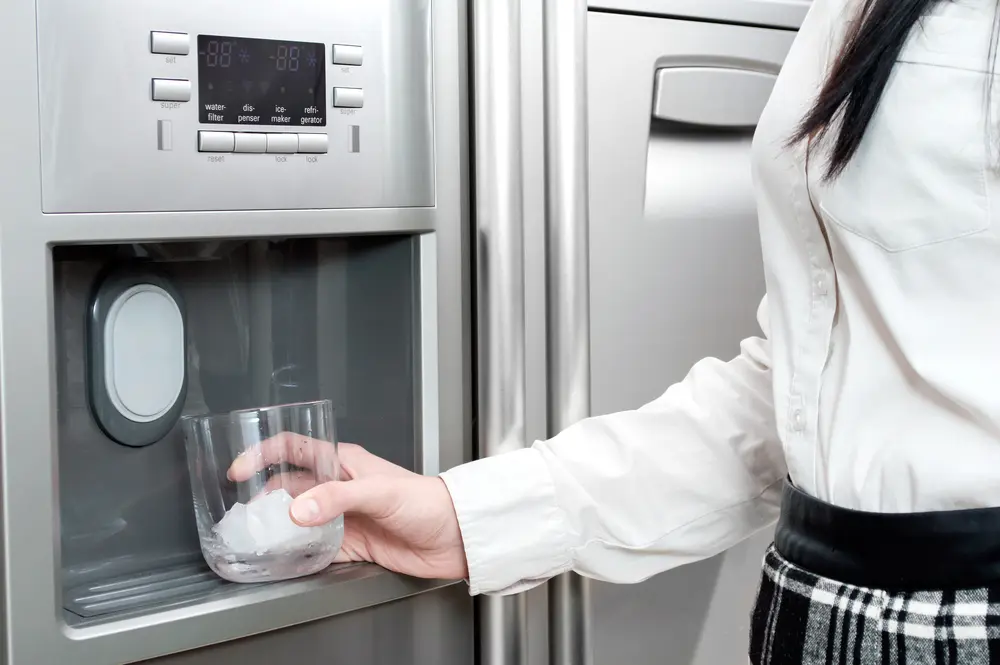
There’s a special kind of heartbreak reserved for opening your freezer on a hot summer day, anticipating the clink of ice in your glass, only to find a sad, empty bin.
Or maybe you find a giant iceberg that looks like it belongs in the North Atlantic rather than your kitchen.
We’ve all been there. After all, we rely heavily on these modern conveniences. In fact, nearly all American households own a refrigerator, and for many of us, the ice maker is the MVP of that appliance. When it goes down, the panic sets in. Do you grab your toolbox and channel your inner handyman, or do you pick up the phone?
Knowing where to draw the line between a brave DIY attempt and a necessary service call can save you money, time, and potentially the cost of a brand-new fridge.
Let’s break down the scenarios where you can be the hero and the moments where you should definitely wave the white flag.
The Simple Stuff: When You’re The Expert

Before you start imagining worst-case scenarios involving compressors and Freon leaks, take a breath. A surprising number of ice maker issues are incredibly simple, and you don’t need an engineering degree to fix them. You just need a little patience (and maybe a hairdryer).
The Case of the Stuck Arm
If your ice maker has stopped producing entirely, the very first thing you should check is the feeler arm. This is that little metal or plastic bar that moves up and down. Its job is to tell the machine when the bin is full. If a rogue bag of frozen peas has knocked it into the “up” or “off” position, your ice maker thinks its job is done.
Check to see if the arm is stuck. If it is, simply push it down. You might feel a little resistance, but it should move. If you hear the machine buzz or click back to life, problem solved!
The Frozen Water Line
Sometimes the problem is a blockage. The small tube that fills your ice mold with water can freeze over, especially if your water pressure is low or if the freezer is set too cold. If you see ice clogging the fill tube, this is a classic DIY moment.
You can use a hairdryer on a low setting to gently melt the blockage. Don’t go crazy with the heat, though, because you can warp the plastic components. Just aim for a gentle thaw. Once the water is flowing again, you’re back in business.
The Filter Fiasco
This one is less of a repair and more of a maintenance check, but it trips people up constantly. A clogged water filter restricts flow. If the water can’t get to the ice mold fast enough, you end up with tiny, hollow cubes or no ice at all.
Manufacturers suggest changing these every six months, but let’s be honest, most of us wait until the “replace filter” light has been staring at us for weeks.
Our advice? Swap out the filter. It’s cheap, easy, and often the culprit behind low ice production.
The Danger Zone: Proceed with Caution
There is a middle ground where things get a bit more technical. You can still handle these if you’re handy, but you need to be careful.
Leveling the Playing Field
If your ice cubes are misshapen or the water is leaking into the bin and freezing into a solid block, your fridge might not be level. Ice makers rely on gravity and precise water measurements. If the fridge is tilting, the water spills out of the mold before it freezes.
Grab a carpenter’s level and place it on top of the fridge. Adjust the feet at the bottom until the bubble is centered. It sounds silly, but a tilted fridge causes more headaches than you’d think.
Inspecting the Door Switch
When you open the freezer door, the ice maker and dispenser usually shut off. That’s the job of the door switch. If this switch is broken, the dispenser won’t work even if the door is closed. You can test this by pressing the switch manually.
If the light goes off, the switch is likely fine. If nothing happens, you might need a multimeter to test for continuity. This requires a bit of electrical know-how, but it is manageable for the ambitious DIYer.
When to Put the Tools Down
There are times when trying to fix it yourself will only make things worse. Modern appliances are complex, and while major appliances are lasting longer than ever, their internal components are becoming increasingly sophisticated. You don’t want to turn a $200 repair into a $2,000 replacement, so if you notice one of these, call a repair company ASAP:
The Leak You Can’t Find
Water is destructive. If you notice water pooling on the floor but can’t find the source, call a pro immediately. A leak could be coming from the internal plumbing of the fridge, a cracked valve, or a hidden line behind the walls. Ignoring it leads to ruined hardwood floors and mold growth, but a professional can trace the leak safely without tearing your kitchen apart.
Electrical Smells or Noises
If your fridge starts making a sound like a dying car engine or you smell burning plastic, unplug it immediately. These are signs of electrical failure or motor burnout. Messing with the wiring of a major appliance carries a real risk of shock or fire, and you need a certified technician to diagnose whether it’s a capacitor, a relay, or the compressor itself.
The Sealed System
If your freezer is running but simply isn’t getting cold enough to freeze water, you might have a problem with the sealed system. This involves the compressor, the evaporator coils, and the refrigerant. Federal law requires that only EPA-certified technicians handle refrigerants because they are hazardous materials.
If you suspect a Freon leak or a compressor failure, do not attempt to fix it. You legally cannot buy the materials needed to recharge the system, and you likely lack the specialized vacuum pumps and gauges required to do the job safely. This is firmly in “Call the Pros” territory.
When the Control Board Dies
Think of the control board as the brain of your refrigerator. If the brain is dead, nothing works. Diagnosing a faulty control board is tricky because it can mimic other problems. You might replace three other parts before realizing the computer was the issue all along.
A professional repair technician has the diagnostic tools to pinpoint a board failure quickly, saving you from playing a guessing game with expensive parts.
Don’t Let the Ice Melt
Living without an ice maker is a first-world problem, sure, but it’s an annoying one. You deserve cold drinks and the convenience you paid for. Start with the simple checks like the feeler arm and the filter. If that doesn’t solve it, or if you start hearing scary noises, don’t be a hero. Protecting your investment is smarter than risking it for the sake of a DIY victory.
When you’ve checked the basics and you’re still staring at a puddle of water or an empty bin, you need a team you can trust. You need experts who know the difference between a clogged valve and a fried circuit board.
If you’re in the Oklahoma City area and your appliance is giving you the cold shoulder, reach out to the team that knows how to get things running again.
Contact OKC Appliance Repair today and get your kitchen back to normal.