


You just pulled a load of towels out of the dryer, and they’re hot, steamy…and still completely wet.
It’s incredibly frustrating. You probably ran the cycle twice, maybe even three times, hoping for a different result. When your dryer heats up but doesn’t actually dry anything, your first instinct is usually to blame the machine itself. You might think the heating element is dead or the thermostat is broken.
But more often than not, the dryer is working fine. The problem is actually the tube behind it, meaning you likely need dryer vent repair, not a new appliance.
Your dryer works on a simple premise: it tumbles wet clothes through hot air. But that moisture has to go somewhere. If the vent is clogged, crushed, or disconnected, that hot, moist air stays trapped in the drum. Your clothes steam instead of dry.
You can’t ignore this and just deal with the effects of wet laundry. A clogged or damaged dryer vent is a fire hazard, and neglecting dryer vent repair can make things get heated (in the wrong way).
The Lint Trap Isn’t Enough
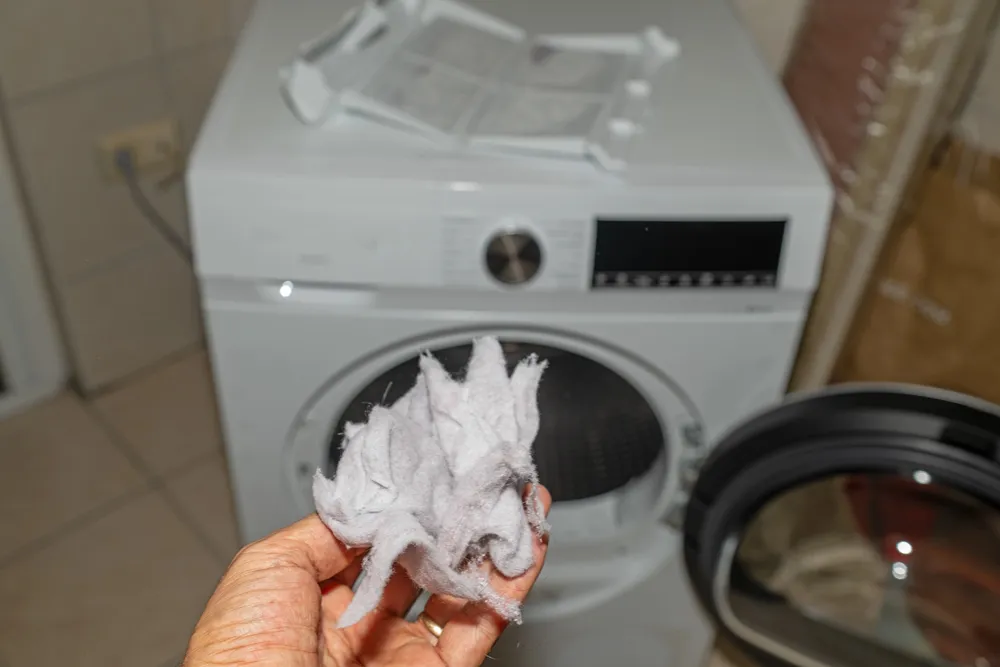
You clean the lint screen after every load. You’re diligent about it. So why is there still lint clogging the pipes in your walls? The screen catches most of the fuzz, but it doesn’t catch everything, and tiny particles of fabric slip past the filter with every cycle. Over months and years, this debris accumulates in the transition hose (the silver tube behind the dryer) and the ductwork leading outside.
This buildup creates friction. As the lint layer thickens, it slows airflow. It acts like cholesterol in an artery. Eventually, the air can’t push the moisture out fast enough, and that’s when you notice your drying times creeping up from 45 minutes to an hour, then to ninety minutes.
If you inspect the vent hood outside your house while the dryer is running, you should see the flaps opening wide and feel a strong, warm breeze. If the flaps barely flutter or you feel little to no air, you have a blockage.
You can sometimes clear the first few feet yourself with a vacuum attachment, but deep clogs usually require a specialized brush kit or professional cleaning to snake through the bends in the ductwork without compacting the lint further.
The Crushed Hose Problem
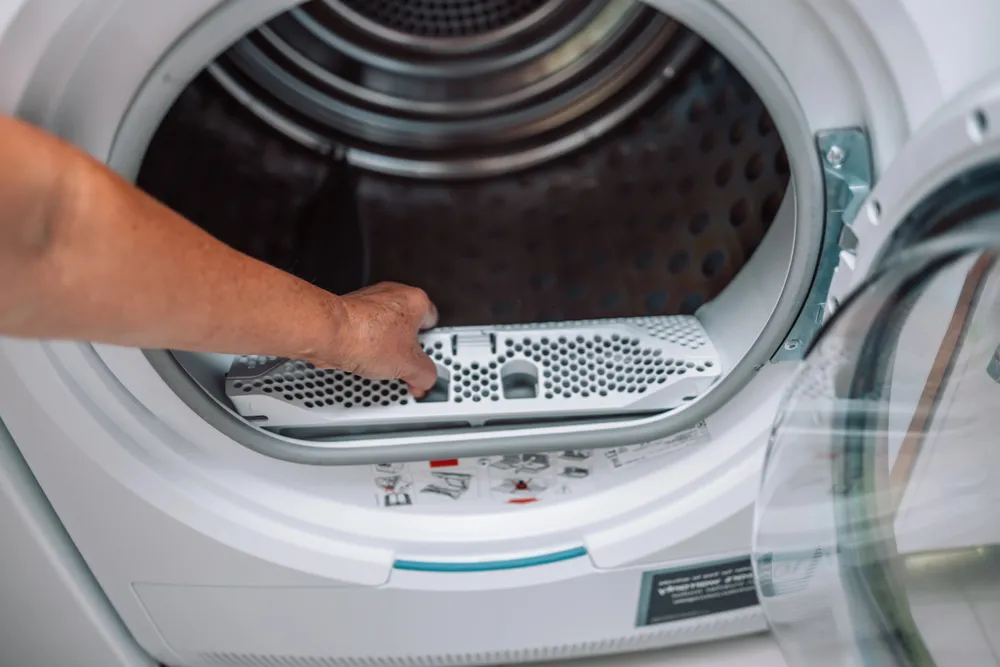
Take a look behind your dryer. In many laundry rooms, space is tight. You want the washer and dryer pushed back as far as possible to maximize floor space. But if you shove the dryer too close to the wall, you might crush the flexible transition hose.
These hoses are often made of foil or semi-rigid aluminum. They’re easy to install but surprisingly fragile. If the hose gets kinked or flattened like a stepped-on soda can, the airflow is instantly restricted, creating a physical bottleneck.
If you see a crushed hose, you need to replace it. Don’t try to bend it back into shape; the metal is already weakened and will likely crimp again or tear. When you install the new one, give the dryer enough breathing room.
If space is really tight, you can buy specialized “periscope” vents that are rigid and slim, designed specifically to fit in narrow gaps without restricting airflow. It seems like a small adjustment, and it is, but it can drastically improve your dryer’s efficiency and lifespan.
Why Plastic Dryer Vents Are a Bad Idea
If you look behind your dryer and see a white plastic or vinyl hose, stop what you’re doing and replace it immediately. These were popular decades ago, but they’re now considered a major safety risk.
The ridges inside plastic hoses are rougher than metal ones, which makes them grab onto lint much faster. Worse, plastic is flammable. If a spark from the dryer motor or heating element ignites the lint trapped inside, a plastic hose will melt and fuel the fire.
But a metal hose effectively contains the fire within the ductwork, giving you time to smell smoke and react, which is why switching to a semi-rigid or rigid metal duct is the single best upgrade you can make for dryer safety. It’s a cheap repair that significantly lowers the risk of a house fire.
Plus, the smooth interior of rigid metal ducts allows air to flow with less resistance, meaning your clothes dry faster and your energy bill goes down.
Birds, Nests, and Unexpected Guests
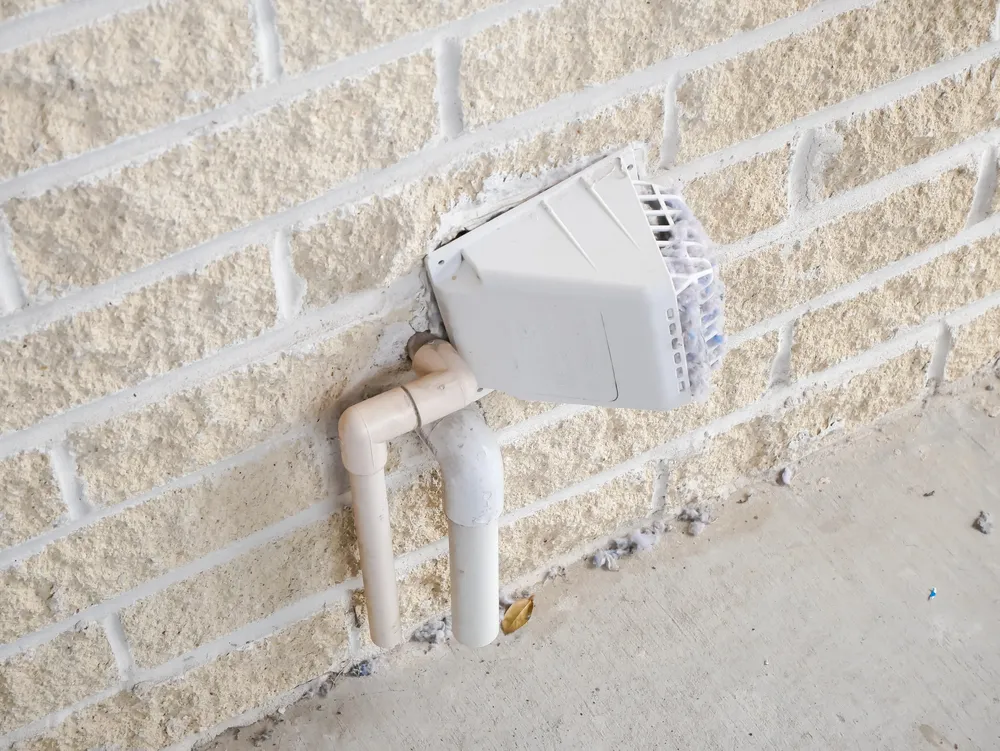
Sometimes the blockage isn’t lint, but local wildlife. In the colder months, the warm air venting from your house looks quite inviting to birds, squirrels, and rodents. If your exterior vent hood is damaged or missing its flapper, critters will crawl inside and build nests.
A bird’s nest is a dense plug of twigs, mud, and grass, and it stops airflow completely. You might hear rustling noises coming from the pipe or notice a bad smell if an animal gets stuck and perishes inside.
Fixing this involves two steps: removing the obstruction and securing the entry point. You’ll need to clean the duct thoroughly to remove nesting materials and potential mites.
Then, install a vent cover with a cage or screen that lets lint escape but keeps animals out. Just make sure to check the screen regularly, as lint can build up on the wire mesh and create a new clog.
Moisture Damage and Mold
Sometimes the hose slips off the back of the dryer or disconnects inside the wall or ceiling. When this happens, you are pumping gallons of hot, humid air directly into your home’s structure every time you do laundry.
This moisture settles on insulation, drywall, and framing studs. In a dark, enclosed space like an attic or crawlspace, this creates the perfect breeding ground for mold. You might not see it for months, but you might start to smell a musty odor or notice paint peeling in the laundry room.
Because of this, it’s wise to regularly check the connection points. You can use metal worm-drive clamps instead of flimsy spring clamps or duct tape. Duct tape actually dries out and loses its stickiness when exposed to heat, eventually falling off. You can also use foil tape, which is the industry standard for a reason; it handles the temperature changes and keeps the seal airtight.
When to Call the Pros for Dryer Vent Repair
You can swap out a hose or clean a lint trap easily enough. But if your ductwork runs twenty feet through an attic, goes up through the roof, or twists through a crawlspace, DIY cleaning becomes risky and difficult. You might push a clog deeper into a bend where you can’t reach it, or accidentally disconnect a pipe inside a wall where you can’t see it.
Technicians also have the right tools to measure the static pressure in the line, and to make sure the air is moving at the correct velocity. They can repair damaged sections of rigid ductwork that are hard to access.
If your dryer feels extremely hot to the touch while running, or if you smell a burning odor, shut it off ASAP. These are red flags that the system is overheating due to blocked airflow. Don’t risk it.
For homeowners in the Oklahoma City area, Appliance Repair OKC Services is ready to help. We can inspect your venting system, clear stubborn blockages, and replace unsafe materials to keep your home safe…and your laundry dry.